
The Florida sun is hard on wood
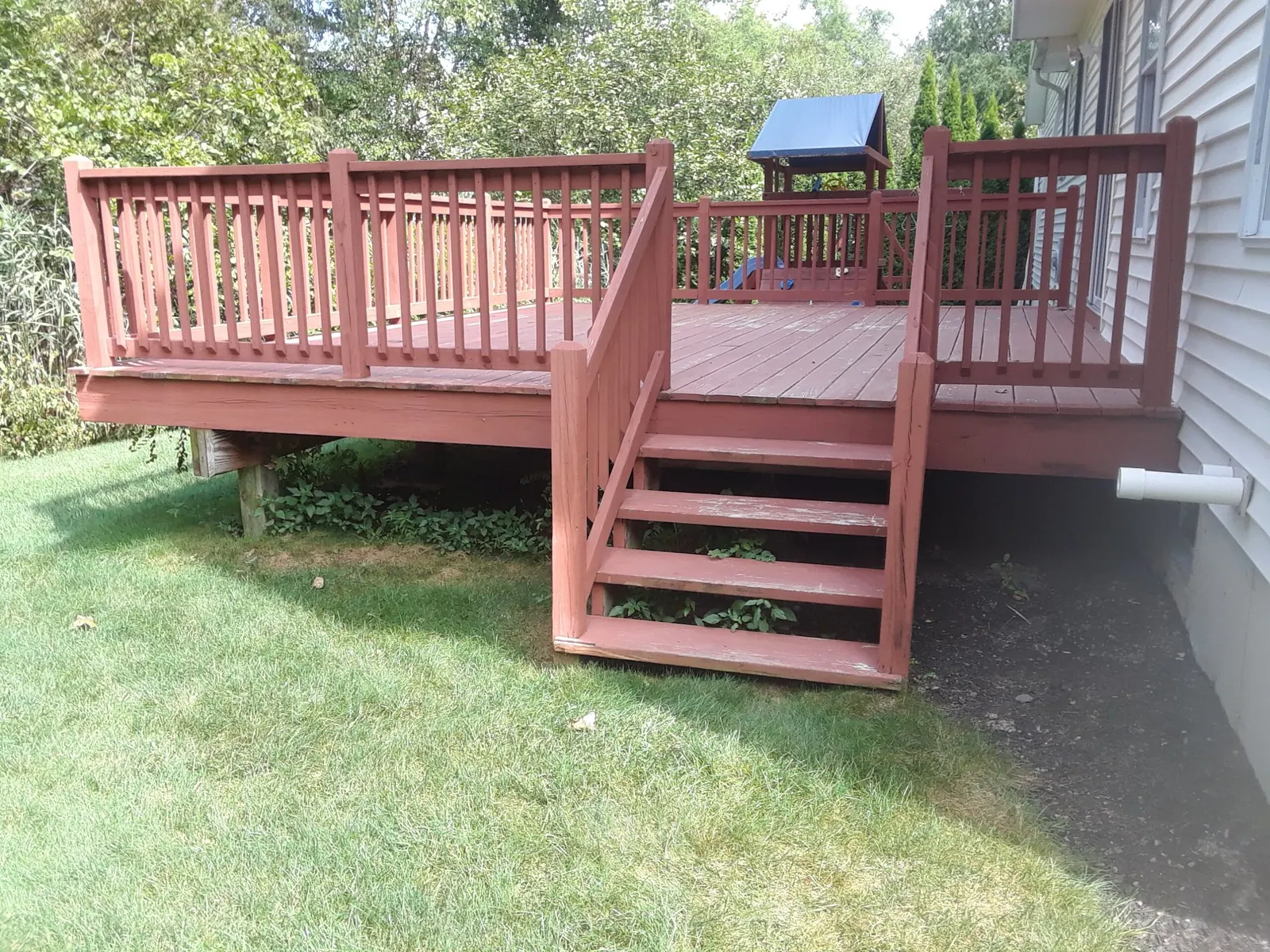
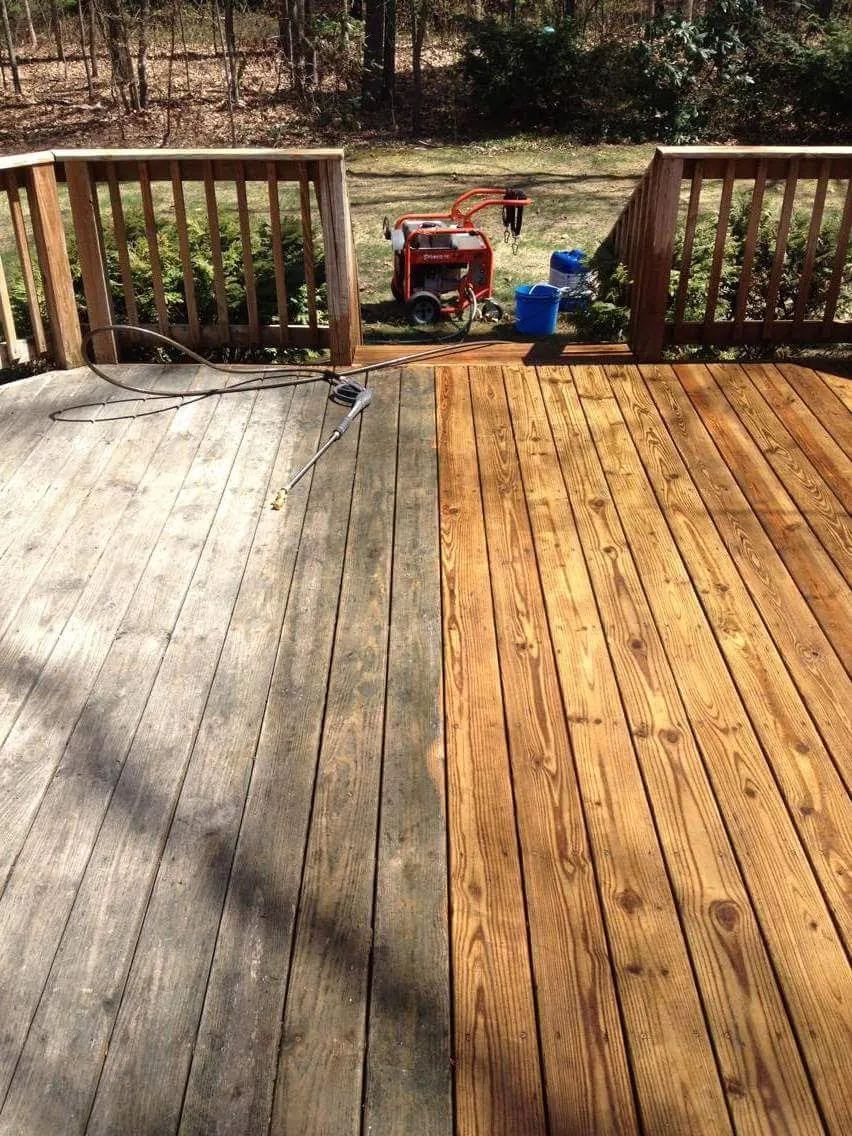
In full Gulf Coast sun, unprotected wood can gray out in a single season. Boards dry, check and splinter, and mildew sets in during the wet months. A proper wash, sand and seal stops the damage and brings the color back.
We clean the wood with a deck cleaner and brightener (not just a pressure washer, which can fur the grain), let it dry fully, sand rough boards and rails, and apply the finish that suits the look you want and the exposure the deck gets.
Choose your finish
- Clear or toned sealer. Keeps the natural wood look. Best for newer decks in good shape.
- Semi-transparent stain. Adds color and more UV protection while showing the grain.
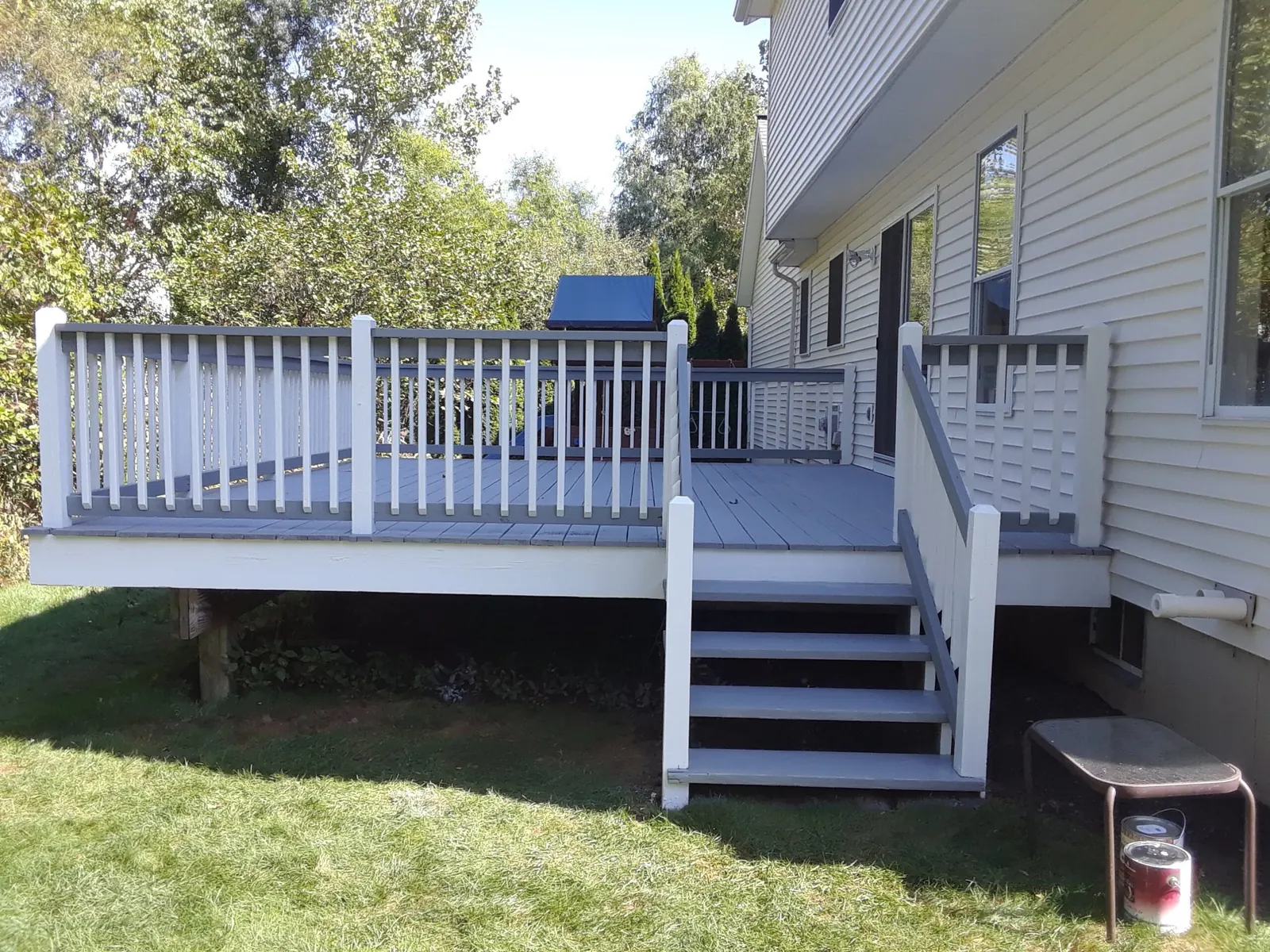
- Solid stain or deck paint. Most coverage and protection for older, weathered or mismatched boards.
What's included
- Deck cleaning and wood brightening
- Sanding boards, rails and caps
- Loose board and nail-head check
- Clear seals, stains or deck paint
- Stairs, railings and pergolas
- Docks, fences and wood siding
New deck? Don't wait a full year to seal it. In Florida sun, waiting a season can already bleach the wood. One customer's brand-new $20,000 deck had turned white before we washed, sanded and clear-sealed it back to the look they wanted.

Sprinkle some water on your deck. If it soaks in instead of beading up, it's time to seal.
Deck Staining FAQ
How often should I re-stain my deck in Florida?
Clear sealers usually need a refresh every 1 to 2 years in full sun; semi-transparent stains about every 2 to 3 years; solid stains 3 to 5 years. Shaded decks last longer.
Do you stain composite decks?
Composite decking generally shouldn't be stained, but it can be deep-cleaned. We can also paint or stain the wood framing, rails and fascia around it.
Will it be slippery?
We use deck-rated products. On painted decks we can add an anti-slip additive for steps and pool areas.